workshop 4
the moment when the actor and the avatar stepped onto the same stage together
Nov 14, 2025
5 min
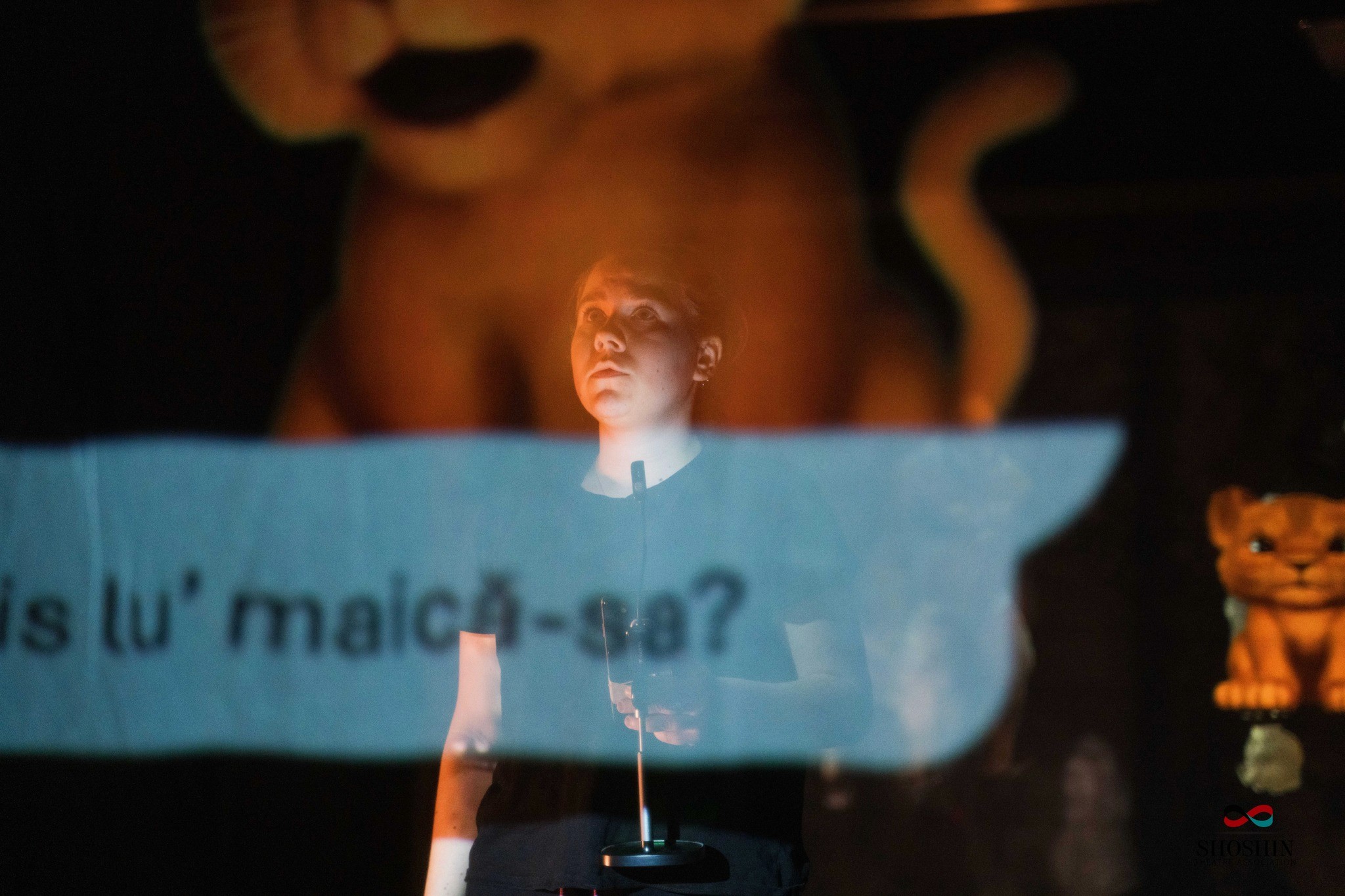
The last workshop represented the moment of synthesis, in which the actor and the avatar were effectively brought together on the same stage, in front of an audience. This stage allowed for direct observation of the dynamics of attention and the relationship between the two presences. One of the key discoveries was that the audience's attention instinctively shifts to the avatar, pushing the actor into the background. At the same time, when comparing the reactions of the audience during the final performances, presented below, we observe that this reception cannot be generalized. The relationship no longer functions according to the classical logic of puppet theater, in which there is a visible puppeteer and an animated object, but as an interaction between two distinct stage identities. In the context of live streaming, this rupture is amplified, and the center of gravity of the performance is rewritten. This last workshop experience resulted in the pilot dramatic text Capcana avatarurilor (The Trap of Avatars, concept and original text: Ioana Sileanu; dramaturgical adaptation and stage version: Cosmin Matei), which explores the tensions between the body and its digital double. The pilot performance follows the story of three teenagers who find themselves trapped in a hybrid space, located on the unstable border between the real and the digital, triggered by an assault committed by one of them on a classmate. Stuck in a transitional zone between worlds, the characters are faced with the need to identify who the "bully" is, but this endeavor does not function as a simple process of individual unmasking, but rather as an investigation of collective responsibility. In this space, avatars do not function as simple representations of identity, but as mechanisms for fragmenting and amplifying inner conflicts, revealing tensions, guilt, and strategies for experiential avoidance. The digital body thus becomes a catalyst for symbolic violence: bullying behaviors no longer appear as isolated acts, but as the results of a relational system in which silence, passivity, and complicity gain dramatic force. In order to escape this space between worlds, the three teenagers are forced to collaborate, a process that generates a journey of both individual and group reconfiguration of their value system. The show investigates responsibility in online environments and how digital actions produce real consequences, proposing a dramaturgy in which confrontation with the avatar becomes a form of ethical assumption and renegotiation of identity.