Workshop 2
workflow
Oct 24, 2025
2 min
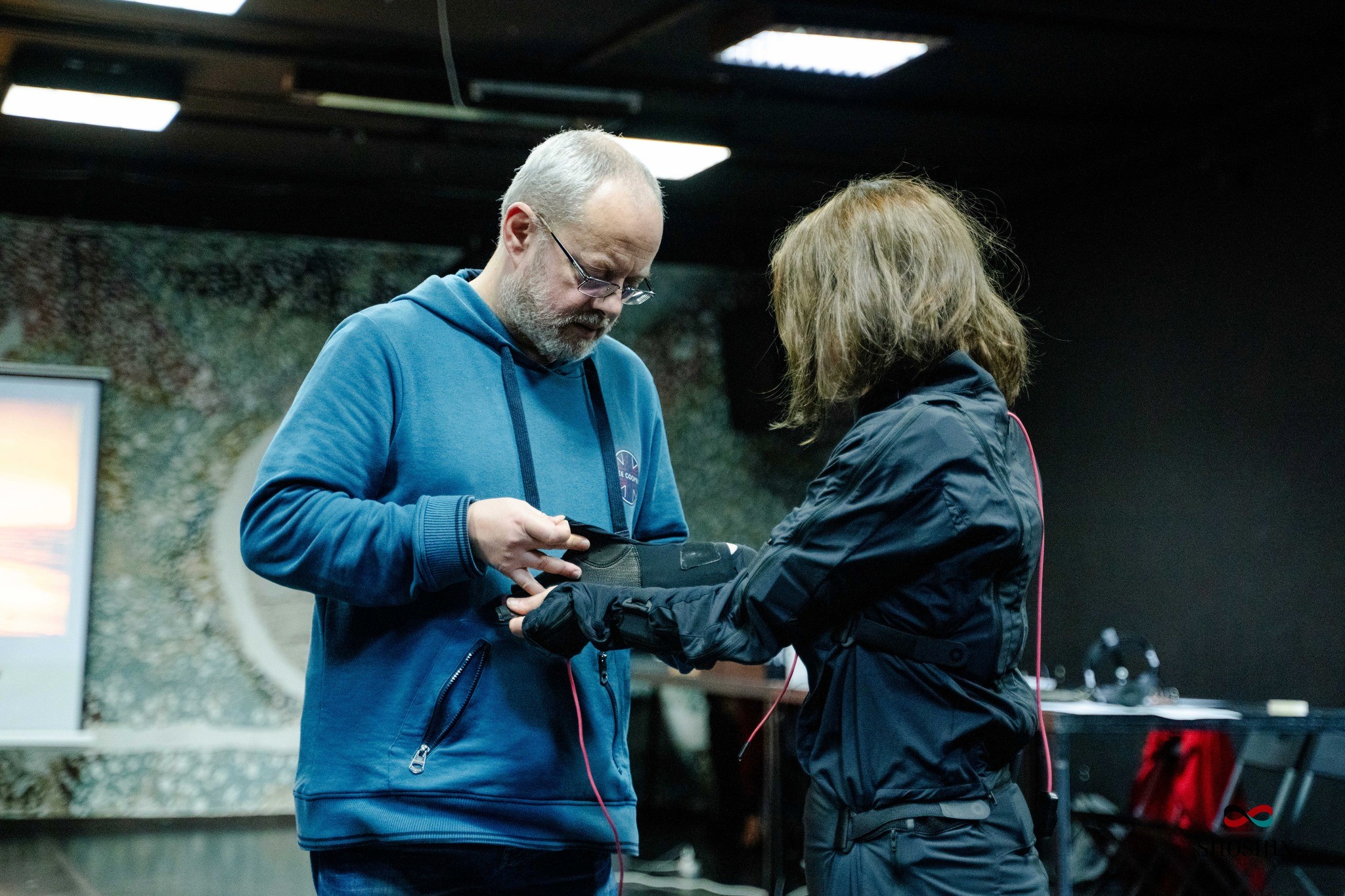
The second workshop focused on establishing a common workflow between the artistic and technical teams. Based on initial explorations, storyboards and test materials were developed: Rokoko full-body captures converted into .fbx files, mp4 video recordings, as well as face capture experiments performed both with dedicated equipment and via webcam, deliberately accepting the aesthetic degradation of tracking. From a dramaturgical point of view, the actors began to explore the dramatic tensions between the live body and the digital double. Although the narrative rhythm of the scenes was kept in line with the original intentions, the work process slowed down considerably due to synchronization issues: variable latencies, jitter on the webcam feed, audio-video delays, Rokoko costume-digital avatar desynchronizations, spatial positioning drifts, which altered the meaning of the scenic moments. These malfunctions were not treated exclusively as errors, but as active factors influencing the construction and dramaturgy of the production of meaning. At this stage, a common annotation system was established (beat ID, physical anchors, relational frame tags, video output trigger timestamps, visual presets), used to label each scene, on stage or through the use of video projection, and to accurately document synchronization errors. The focus of the workshop was not on obtaining finished products.